Korean Temple Stays: What to Expect and What to Confirm in English
If shared sleeping and a pre-dawn start would spoil the experience, choose a short day program. If you want to join Buddhist ceremonies, meditate and take part in a communal routine, an overnight Korean temple stay can earn its place in your trip. For more time to yourself, look for a program that explicitly makes activities optional.
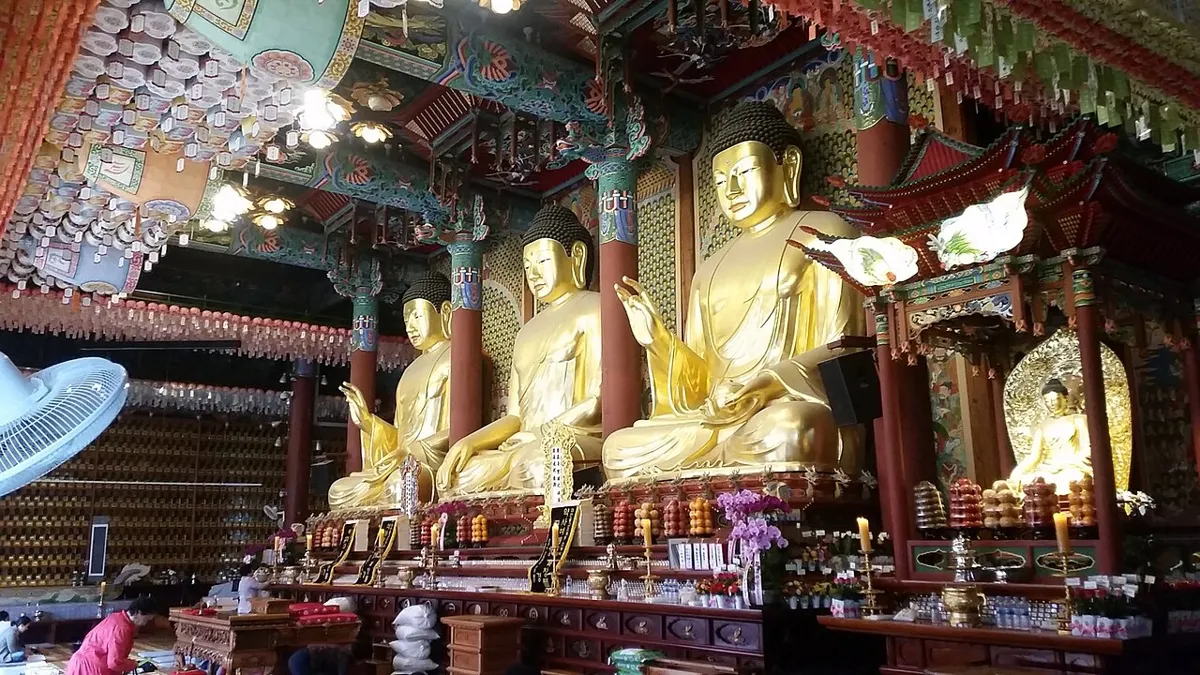

Templestay introduces Korean Buddhism and traditional culture through participation. The setting matters, too. Jogyesa’s program acknowledges the sounds of the surrounding city. Woljeongsa, in Pyeongchang in Korea’s Gangwon region, offers walks through fir forest and beside a stream. Your day might revolve around ceremonies and shared meals, or leave room for reading and walking, depending on the program you choose.
Choose the right format
| Format | What to expect | Choose it if |
|---|---|---|
| Short day program | Usually two or three hours, with a temple tour, meditation and tea ceremony. The exact session varies. | You want an introduction while keeping your existing accommodation. |
| Experience-oriented overnight stay | Often one night, with activities such as chanting, meditation, 108 full bows and cultural crafts. | You want structured participation and can accept a communal routine. |
| Rest-oriented stay | A relaxation-focused program that may include meditation and ceremonies. Participation rules vary. | You want more time to yourself and can find a session with explicitly optional activities. |
The named programs below show how much the details can differ. The format name alone won’t answer every question about your stay.
Can you do a Korean temple stay in English?
Yes. Myogaksa temple in Seoul explicitly lists its overnight program as delivered in English or translated into English. That makes it a useful starting point if understanding the instruction is central to your decision. Its listing also warns that you may share a room.
An English booking page doesn’t necessarily mean activities run in English. The useful distinction is whether support covers orientation, activity instructions and questions during your chosen session.
What an overnight stay can look like
Myogaksa’s published two-day schedule shows the commitment involved. This is a sample from that program, and it can change.
| Part of the stay | Myogaksa’s sample routine |
|---|---|
| First afternoon | Orientation, 108 full bows and prayer-bead making, followed by bell striking, a Buddhist ceremony and a temple tour. |
| Evening | Dinner, then meditation from 18:20 to 19:00. Rest and sleep begin at 19:00. |
| Early morning | A waking period from 04:00 to 05:00, followed by bell striking and a Buddhist ceremony at 05:00, then meditation. |
| Later morning | Breakfast, tea with a monk and communal cleaning, with departure between 09:30 and 10:00. |
Choose this kind of stay because you want to take part in the routine. The early start, shared tasks and scheduled activities are substantial parts of the experience.
Do you have to join every activity?
Participation rules vary. You can generally rest if you feel unwell or too tired, after telling staff. For a stay built around independent downtime, look for a clear optional-participation policy.
Jogyesa’s sample program marks its evening ceremony and 108 bows as optional. It also includes making a paper lotus lantern. Tea with a monk depends on group size, with a writing activity replacing it when fewer than five people participate.
Woljeongsa’s relaxing-program listing for 1 November 2026 to 1 January 2027 makes all activities optional. It offers forest and stream-side walks, ceremonies, reading and rest, and excludes tea with monks. For later dates, confirm that the same format is offered. Its temple grounds also contain an eight-sided stone pagoda with nine stacked storeys, giving a walk around the temple a specific cultural focus.
If bows or prolonged sitting would be difficult, suitable alternatives need individual agreement. General permission to rest doesn’t settle those arrangements.
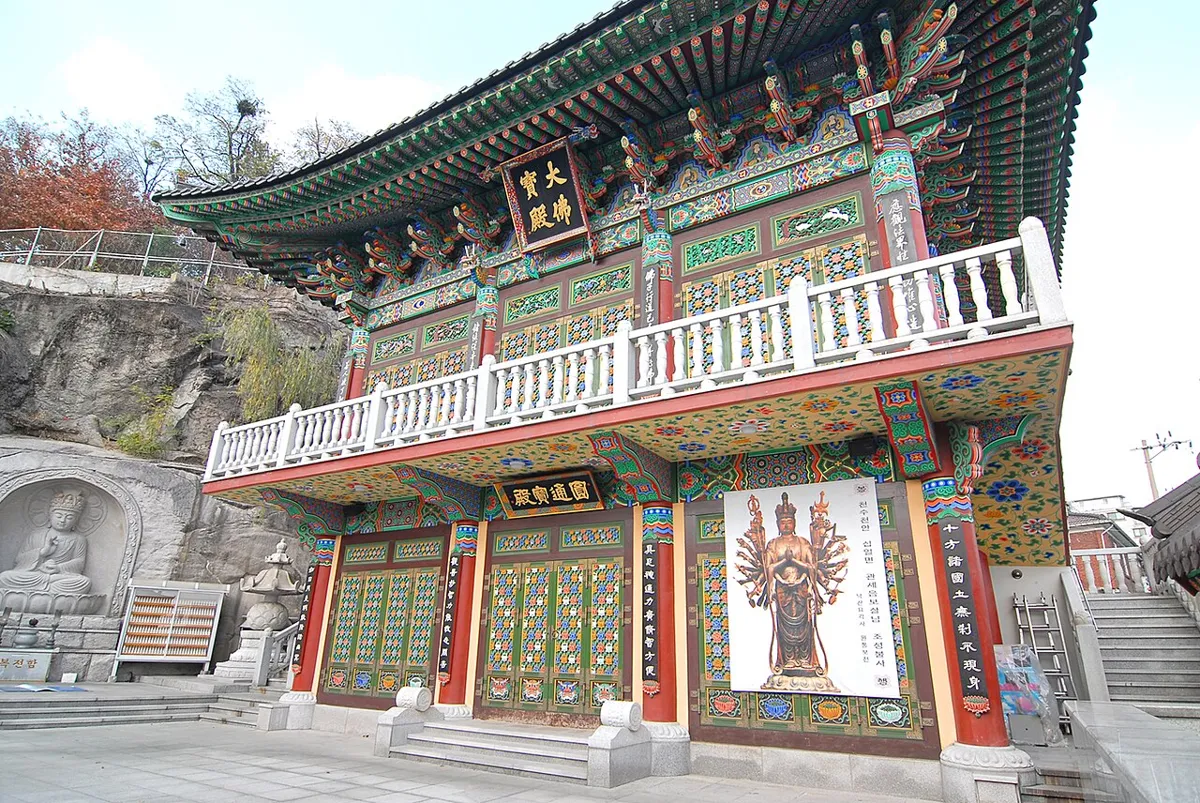

Shared rooms, companions and bathrooms
Expect shared accommodation, although some temples offer private rooms for two to four people at an extra charge.
Travelling together doesn’t always mean sleeping together. Jogyesa’s listing says couples are assigned separate rooms and gives an exception for parents with minor children. Private-room requests require advance arrangements and payment.
Baekyangsa’s temple-food program normally uses gender-based shared rooms for three to six people. It describes paid private-room requests as difficult to accommodate and warns that its rooms are not soundproof. Choose it only if communal sleeping suits you.
Private occupancy and a private bathroom are separate questions. Woljeongsa’s relaxing-program listing states that all rooms have private bathrooms. That doesn’t mean you’ll have the room to yourself. Its rooms are assigned during booking, with no changes on check-in day.
Meals and a food-focused stay
Some temple meals are themselves Buddhist practice. Balwoogongyang is a traditional monastic meal that emphasises equal sharing and avoiding waste. If this interests you, look for a program that specifically includes the ceremonial meal.
Baekyangsa temple sits in the mountains of Naejangsan National Park, in the province of Jeollanam-do. Its named temple-food program features a demonstration by Buddhist temple-cuisine practitioner Jeong Kwan. The sample schedule places the demonstration after room checkout, so the food experience continues beyond the overnight accommodation portion.
For travellers drawn to temple cuisine, that is a concrete reason to consider the program. Expect a demonstration rather than assuming a hands-on cooking class. Sessions are listed as monthly, with dates released once confirmed. The particular session and Jeong Kwan’s participation need confirmation before making this the centrepiece of a trip.
This program also restricts leaving the grounds after check-in unless discussed with the administrator. It suits travellers willing to spend the stay within the temple’s routine.
Baekyangsa asks guests to report allergies and health concerns in advance. Reporting an allergy and having suitable meals available are separate matters, so include your specific needs in your enquiry.
What to pack
Use your chosen program’s packing list, with these differences in mind.
- Socks and personal items. Myogaksa requires socks and asks guests to bring toiletries, a water bottle and personal belongings such as sleepwear.
- A towel if required. Myogaksa lists a towel as supplied. Baekyangsa requires guests to bring their own.
- Clothes for the supplied uniform. Baekyangsa provides a vest and trousers and asks for a T-shirt underneath. It also calls for socks in the Buddhist halls and comfortable walking shoes.
What to confirm in English
Send a short, specific enquiry about the session you want.
- Will orientation and activity guidance be in English, or translated into English?
- Which activities are required, and can staff agree to alternatives for bows or prolonged sitting?
- Who will share my room? Can my travelling companion and I stay together, and is any private-room arrangement confirmed?
- What bedding is provided, and who uses the bathroom?
- Can you provide suitable meals and handle my stated allergy or dietary requirement?
- Does the route into the temple and accommodation meet my access needs?
- What is the arrival cutoff, and what do I need to bring?
Arrival rules can affect which stay is practical. Woljeongsa’s relaxing-program listing, for example, prohibits check-in after 16:30.
For an English-supported structured overnight experience, start with Myogaksa’s program. For more freedom, seek explicit optional-activity wording. If communal sleeping is the sticking point, a short day program lets you take part and keep your own accommodation.
Useful links
- Myogaksa: English-supported overnight program and sample schedule
- Baekyangsa: Experience Temple Food and Culture with Ven. Jeong Kwan
Sources
- templestay.com · View.do
- templestay.com · View.do (linked above)
- templestay.com · View.do (linked above)
- templestay.com · View.do
- templestay.com · View.do
- templestay.com · Introview.do
- english1.visitkorea.or.kr · Ecatalogt.jsp