Where to stay in Seville for a short city break
Book Santa Cruz if your short break revolves around Seville’s major monuments. Choose Arenal if you want cathedral-side sightseeing and time beside the river. Pick Triana if ceramics and flamenco evenings are a big part of the trip, and you’re happy to cross the river for the central sights.

Seville is Andalusia’s capital, known for its monuments and flamenco. Your days could lean towards royal-palace visits and old-town alleyways, or towards craft shops followed by an evening show. Where you stay changes which of those experiences sits closest to home.
Which neighbourhood suits your break?
| Neighbourhood | What you can enjoy | Location and priority distinction |
|---|---|---|
| Santa Cruz | Historic alleyways and the main monument cluster | Choose it for a break centred on the royal palace, cathedral and historic archive. |
| Arenal | Cathedral-side sightseeing and riverside walks | Between the cathedral and river, making it a good fit when both matter. |
| Triana | Ceramics shops, workshops and flamenco evenings | Across the river from central Seville. Staying here means crossing back for the central sights. |
| El Centro | Traditional shopping, including fans, hats and flamenco dresses | Choose it when browsing shops is part of the holiday itself. |
| Alfalfa | Cafes, squares and a palace visit | A base for days built around cafe stops and smaller-scale sightseeing. |
| Sur | A landmark square and a substantial park | South and east of the historic core, with the emphasis on the city’s exposition landmarks. |
| La Alameda | Nightlife | A purposeful choice when evenings out matter most. |
Santa Cruz or Arenal?
Santa Cruz is our first choice for a monument-led first visit. This historic old-town quarter has a network of alleyways, with three major heritage sights clustered at its edge. The Real Alcázar is a royal palace, rebuilt as a royal residence in the 14th century from an earlier Almohad building. Seville Cathedral is another central draw. The General Archive of the Indies completes the cluster.
That concentration gives Santa Cruz a clear purpose: stay here when those visits are the main reason you’re coming. You also get the old-town streets as part of your day, rather than treating the neighbourhood purely as somewhere to sleep.
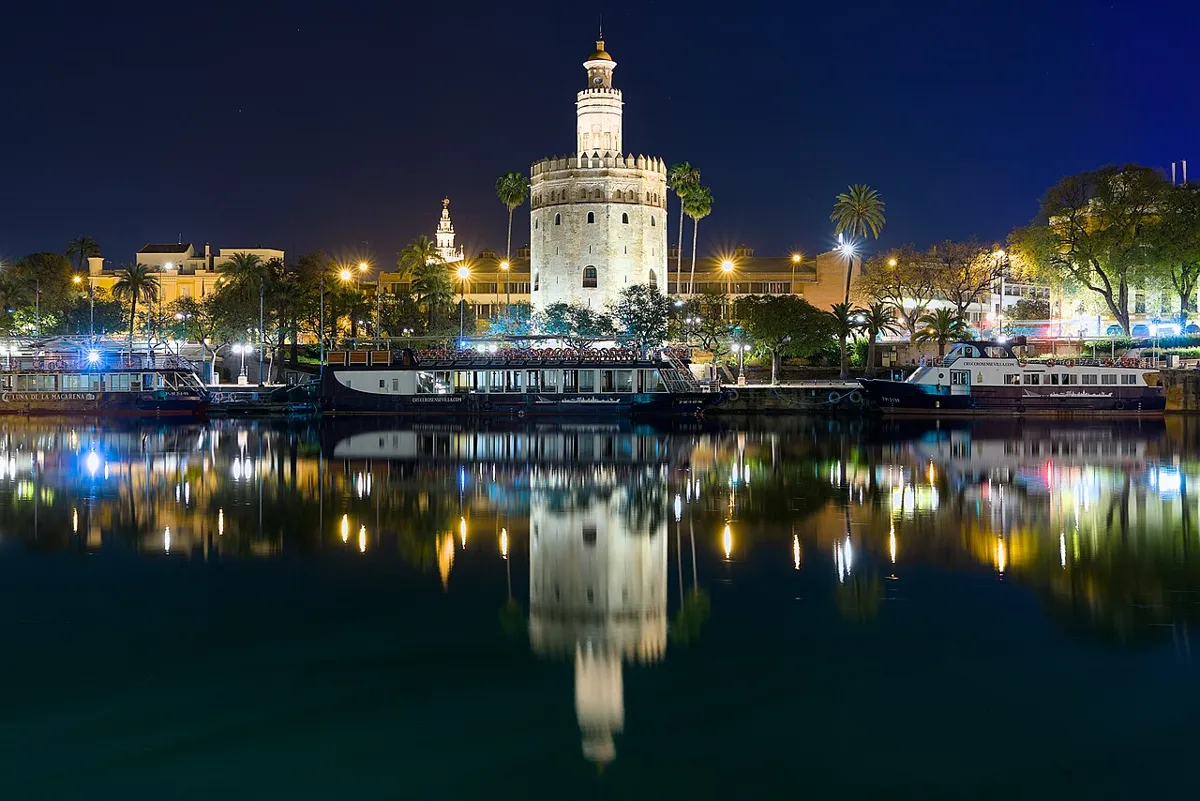
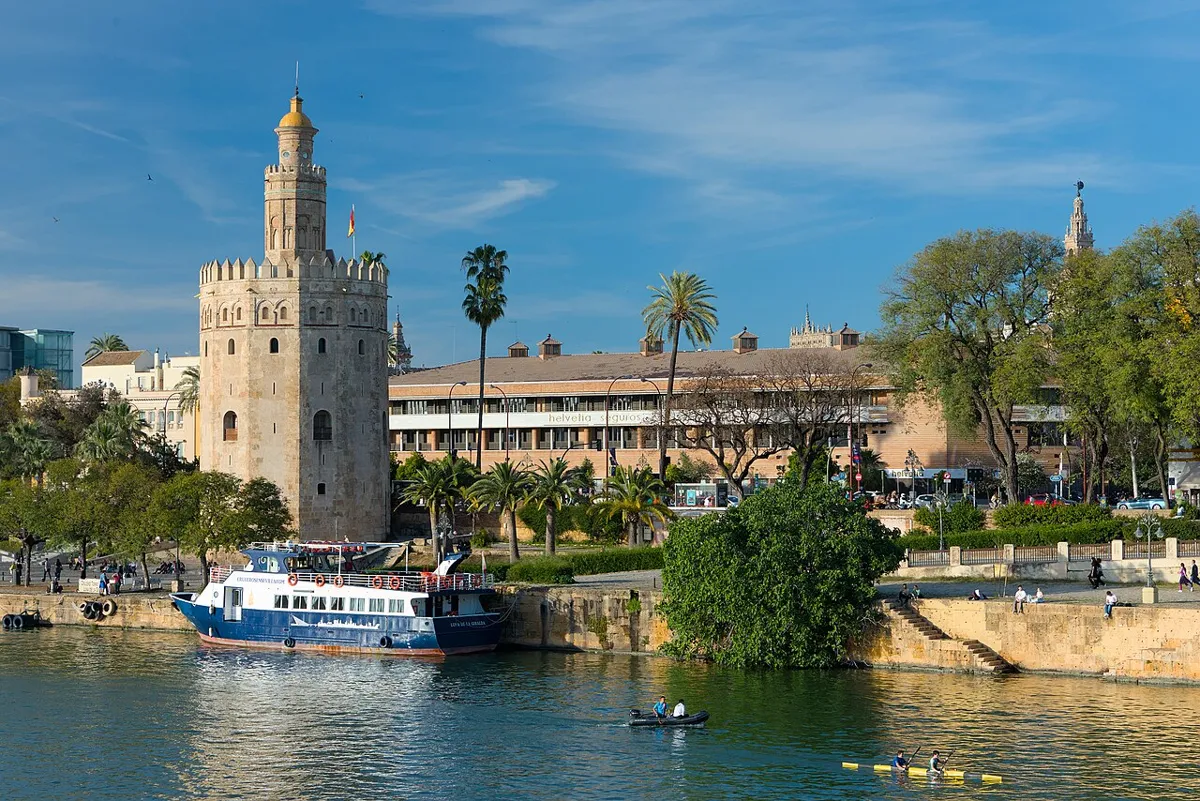
Arenal is the stronger fit if you want to mix monuments with riverside time. It extends from the cathedral down to the Guadalquivir, the river running through Seville. You can build a day around sightseeing, then spend part of it along the Paseo de Cristóbal Colón, a riverside walkway. The Torre del Oro, a 13th-century watchtower, gives that stretch a historic landmark of its own.
The distinction is straightforward: Santa Cruz puts the monument cluster at the heart of the stay; Arenal gives the river a bigger role. Neither choice needs a promise of cheaper rooms or quieter nights to make sense.

Triana for ceramics and flamenco evenings
Choose Triana when you want the neighbourhood’s crafts and evening venues to shape the trip. It sits across the river from the main city, connected to central Seville by Triana Bridge.
Traditional ceramics are a real reason to spend time here. Shops and workshops give you something to browse beyond the major monuments, whether you’re looking for a keepsake or simply interested in the craft. Flamenco venues add an evening focus. Calle Betis is a lively riverfront street with colourful buildings overlooking the water.
The compromise is geographical: central sightseeing means crossing the river. If the palace and cathedral dominate your plans, Santa Cruz is the more direct choice. If you’re just as interested in ceramics and flamenco evenings, Triana earns its place on your shortlist. Choose it for those experiences, without needing to rank one side of Seville as more authentic than the other.
Shopping, cafes or parks?
El Centro suits travellers who enjoy shopping as part of a city break. Its traditional shopping streets include Calle Sierpes. Calle Tetuan offers more browsing, with the area’s shops known for items such as fans, hats and flamenco dresses.
Alfalfa is a better match for cafe-and-square days. The neighbourhood centres on Plaza Alfalfa, a square with cafes and restaurants. Its principal sightseeing draw is Casa de Pilatos, an elaborate historic palace. Choose Alfalfa if you’d rather build your day around a palace visit and cafe stops than shopping streets.
Sur makes sense when parks and exposition landmarks are priorities. This district lies south and east of the historic core. Plaza de España, a landmark square, was built for the city’s preparations for the 1929 Ibero-American Exposition. Parque de María Luisa, the large park associated with those preparations, adds space for park time alongside sightseeing. Book here because those places appeal to you; Santa Cruz remains the stronger match for the main monument cluster.
La Alameda for nights out
La Alameda is a nightlife-led option, associated with Seville’s student and LGBTQ+ communities. Keep it on your shortlist when going out is a central part of the break. For a trip led by monuments, riverside time or ceramics, the earlier choices give you a more specific match.
Once you’ve chosen an area, assess quietness and access at the property level. Check the room’s position and sound insulation if sleep matters, and confirm step-free access or lifts if you need them. A neighbourhood’s evening reputation cannot tell you how an individual room will feel.